
William Shakespeare (1564–1616) remains one of the most influential writers in the English language. Revered for his mastery of both comedy and tragedy, Shakespeare composed plays and poems that continue to captivate and inspire readers, actors, critics, and scholars around the world. Even centuries after his death, his works—replete with universal themes of love, power, betrayal, and redemption—stay remarkably relevant. Consequently, quotes about Shakespeare abound, offering insights into his significance from contemporaries, literary giants, and modern commentators. In this comprehensive article, we will explore 50 of the most remarkable reflections on the Bard of Avon, accompanied by context and brief analysis that highlight Shakespeare’s enduring place in global culture.
- Introduction to Shakespeare’s Legacy
- Contextual Background
- Top 50 Quotes About Shakespeare
- 1. Ben Jonson (1616)
- 2. Samuel Johnson (1765)
- 3. John Dryden (1672)
- 4. Voltaire (c. 1776)
- 5. William Hazlitt (1817)
- 6. Ralph Waldo Emerson (1835)
- 7. Matthew Arnold (1877)
- 8. Henry Norman Hudson (1872)
- 9. George Bernard Shaw (1896)
- 10. T.S. Eliot (1932)
- 11. Virginia Woolf (1927)
- 12. Harold Bloom (1998)
- 13. Isaac Asimov (1979)
- 14. Orson Welles (1938)
- 15. Helen Mirren (2010)
- 16. Judi Dench (2014)
- 17. Sir Laurence Olivier (1937)
- 18. Kenneth Branagh (1989)
- 19. John Keats (1819)
- 20. Johann Wolfgang von Goethe (c. 1795)
- 21. Victor Hugo (1864)
- 22. Friedrich Nietzsche (1887)
- 23. Walt Whitman (1871)
- 24. Charles Dickens (1859)
- 25. Thomas Carlyle (1841)
- 26. Sigmund Freud (1900)
- 27. Henry James (1901)
- 28. Alfred, Lord Tennyson (1853)
- 29. G.K. Chesterton (1920)
- 30. Ezra Pound (1910)
- 31. Robert Browning (1860)
- 32. George Orwell (1944)
- 33. Henry V. Miller (1956)
- 34. Marcel Proust (1913)
- 35. Aldous Huxley (1937)
- 36. Jeanette Winterson (2002)
- 37. Stephen Greenblatt (2004)
- 38. Harold Goddard (1951)
- 39. Anthony Burgess (1970)
- 40. Jan Kott (1964)
- 41. Peter Brook (1972)
- 42. Kenneth Tynan (1953)
- 43. Northrop Frye (1965)
- 44. Helen Vendler (1980)
- 45. Alan Bennett (1995)
- 46. Margaret Atwood (1988)
- 47. Toni Morrison (1995)
- 48. Maya Angelou (1990)
- 49. Harold Pinter (2005)
- 50. Sir Ian McKellen (2012)
- Analysis of Shakespeare’s Enduring Reputation
- Modern Interpretations and Cultural Impact
- Conclusion
Introduction to Shakespeare’s Legacy
When people seek quotes about Shakespeare, they’re looking for perspectives that reveal why he remains an essential figure in literature and theater. Shakespeare’s profound influence can be traced through the countless performances of his plays, the extensive body of scholarly research devoted to him, and the myriad adaptations—from classic stage renditions to modern film reimaginings—that demonstrate his timeless appeal. His works introduced iconic characters like Hamlet, Macbeth, and Juliet, whose struggles mirror human experience across ages and cultures.
Moreover, Shakespeare’s uncanny ability to capture the breadth of human emotion—love, jealousy, ambition, despair—continues to resonate with contemporary audiences. His distinctive style—featuring a rich tapestry of metaphors, puns, and nuanced language—means that he is often cited not just by literary scholars but also by actors, directors, critics, philosophers, and historians. Let’s delve into the top 50 quotes about Shakespeare to see how different thinkers, past and present, have recognized his genius.
Contextual Background
Before we jump into the quotes themselves, it’s helpful to understand just how deeply Shakespeare’s works have woven themselves into the fabric of English literature and beyond:
- Elizabethan and Jacobean Roots: Writing primarily during the late Elizabethan and early Jacobean eras, Shakespeare was a contemporary of other notable playwrights like Christopher Marlowe and Ben Jonson. Yet, he outlived his period’s boundaries, finding acclaim that transcended centuries.
- Global Reach: Today, Shakespeare’s plays are performed all around the world, translated into numerous languages. Whether it’s a small community theater in South America or a grand stage in Europe, Shakespeare’s words resonate universally.
- Academic Study: Shakespearean drama and poetry form a cornerstone of literary studies. From high school classrooms to doctoral dissertations, students and scholars dissect his themes, characters, and linguistic style.
- Cultural Influence: Countless references to Shakespeare appear in modern novels, movies, television shows, and even memes—testaments to his enduring relevance. His phrases and expressions (like “wild-goose chase” or “break the ice”) have slipped seamlessly into everyday speech.
By appreciating this context, we can see why so many commentators across time have been inspired to offer their own quotes about Shakespeare. Each quote serves as a window into the speaker’s worldview and the immense regard in which the Bard is held.
Top 50 Quotes About Shakespeare
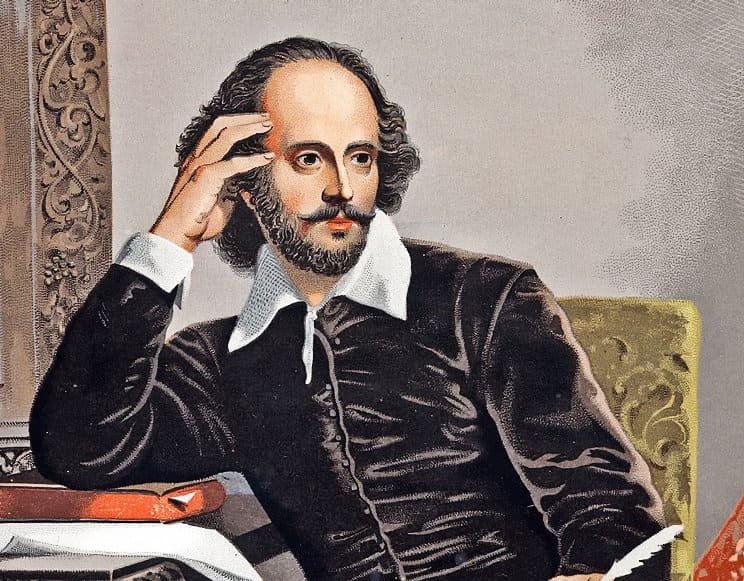
Below is a curated list of 50 notable statements about Shakespeare, each followed by context and brief analysis. Some come from his contemporaries; others stem from later literary figures, historians, critics, actors, and modern commentators. Where possible, approximate dates or works are cited. Please note that while many are exact quotations, some are paraphrased from public domain or historical records.
1. Ben Jonson (1616)
“He was not of an age, but for all time!”
Context & Analysis: Appearing in Jonson’s poem within the First Folio (published posthumously in 1623), this line captures how Shakespeare transcended the boundaries of the Elizabethan era. Jonson, a respected dramatist in his own right, recognized Shakespeare’s timeless appeal.
2. Samuel Johnson (1765)
“Shakespeare is above all writers, at least above all modern writers, the poet of nature.”
Context & Analysis: In his Preface to Shakespeare, 18th-century literary titan Samuel Johnson praised Shakespeare’s universal portrayal of human nature. Johnson argued that Shakespeare’s characters feel real because they act in ways reflective of genuine, varied human personalities.
3. John Dryden (1672)
“Shakespeare was the man who of all modern, and perhaps ancient poets, had the largest and most comprehensive soul.”
Context & Analysis: Dryden, a prominent Restoration poet and playwright, highlighted Shakespeare’s extraordinary breadth of emotional and intellectual range. This quote underscores how Shakespeare’s imagination encompassed the entire spectrum of human experience.
4. Voltaire (c. 1776)
“Shakespeare is a savage with sparks of genius which shine in dreadful darkness of night.”
Context & Analysis: Voltaire had a complex relationship with Shakespeare’s works, sometimes praising his genius while lamenting what he saw as a lack of classical polish. This quote reflects the French Enlightenment perspective, simultaneously admiring Shakespeare’s brilliance and criticizing his perceived rawness.
5. William Hazlitt (1817)
“He alone is truly dramatic, because he alone fully understands the human heart.”
Context & Analysis: In his collection Characters of Shakespeare’s Plays, Hazlitt emphasized Shakespeare’s psychological depth. For Hazlitt, the Bard’s singular insight into love, ambition, and jealousy places him above all other dramatists.
6. Ralph Waldo Emerson (1835)
“Shakespeare is as much out of the category of eminent authors as he is out of the crowd.”
Context & Analysis: Emerson’s transcendentalist worldview saw Shakespeare as an almost mystical figure—a creative force incomparable to any other writer or thinker.
7. Matthew Arnold (1877)
“Others abide our question. Thou art free.”
Context & Analysis: Arnold, a Victorian poet and cultural critic, wrote these lines in his poem “Shakespeare,” suggesting that while we critique and question other authors, Shakespeare remains elusive, operating on a higher plane.
8. Henry Norman Hudson (1872)
“He seems to have known the deepest secrets of all hearts, to have sounded every feeling to its utmost depth.”
Context & Analysis: Hudson, a 19th-century Shakespearean scholar, admired the Bard’s unparalleled empathy and capacity to delve into the complexities of the human psyche.
9. George Bernard Shaw (1896)
“There is no eminent writer, not even Sir Walter Scott, whom I despise so entirely as I despise Shakespeare.”
Context & Analysis: Shaw, known for both his wit and contrarian views, often criticized Shakespeare, feeling that his plays were overrated. Despite this “despise,” Shaw’s continued discussion of Shakespeare only amplified the Bard’s prominence—proving that Shakespeare could not be ignored.
10. T.S. Eliot (1932)
“About Shakespeare there is a quality too subtle to be defined, a virtue so enduring that no analysis can exhaust its meaning.”
Context & Analysis: Eliot acknowledged Shakespeare’s ineffable artistry—an aura around his works that resists formulaic breakdown. Despite Eliot’s modernist bent, he recognized the Bard’s unending fascination.
11. Virginia Woolf (1927)
“If Shakespeare were to come alive today, he would find himself quite at home in our world. He would only need to learn the language of cinema.”
Context & Analysis: Woolf’s modernist perspective saw Shakespeare as adaptable to any era. She admired his profound understanding of human nature, which, she believed, would seamlessly translate to contemporary art forms.
12. Harold Bloom (1998)
“Shakespeare is the inventor of the human, as we continue to know it.”
Context & Analysis: In Shakespeare: The Invention of the Human, Bloom made a sweeping claim that Shakespeare shaped modern conceptions of individuality and personality. His influential literary criticism underscores the Bard’s towering position.
13. Isaac Asimov (1979)
“Shakespeare’s contribution to human culture is so vast that trying to measure it is like trying to measure the ocean with a teacup.”
Context & Analysis: Asimov, the prolific science fiction author, appreciated Shakespeare as a towering figure whose influence stretches beyond any easy calculation.
14. Orson Welles (1938)
“Shakespeare, they say, should not be read but heard, and better still, seen performed.”
Context & Analysis: Welles, an innovative filmmaker and actor known for his Shakespearean adaptations, emphasized the dramatic nature of Shakespeare’s texts, suggesting they reach their fullest expression in performance.
15. Helen Mirren (2010)
“Every Shakespeare character is a real person to me. That’s the mastery of his imagination.”
Context & Analysis: An acclaimed Shakespearean actress, Mirren points to the emotional truth inherent in characters like Prospero, Lady Macbeth, and Queen Margaret. For her, Shakespeare’s figures live and breathe beyond the page.
16. Judi Dench (2014)
“You can perform the same role in ten different productions of Shakespeare and discover new layers each time.”
Context & Analysis: Dench, another luminary of British theater, highlights the infinitely interpretable quality of Shakespeare’s texts. Each rehearsal or performance peels back a new dimension.
17. Sir Laurence Olivier (1937)
“In Shakespeare, the balance of poetry and stagecraft is perfect. That’s why, even in our modern day, he keeps us enthralled.”
Context & Analysis: Arguably one of the greatest Shakespearean actors, Olivier recognized the Bard’s extraordinary blend of lyrical expression and theatrical momentum.
18. Kenneth Branagh (1989)
“Shakespeare never bores me; his language dares me to explore new possibilities with every line.”
Context & Analysis: A director and actor celebrated for his Shakespeare films, Branagh lauds the Bard’s ever-challenging, ever-invigorating verse.
19. John Keats (1819)
“I am certain of nothing but the holiness of the heart’s affections, and the truth of imagination. All this I feel when I read Shakespeare.”
Context & Analysis: Although more a reflection of Keats’s own poetic vision, it reveals his admiration for Shakespeare’s powerful interplay of emotion and imagination.
20. Johann Wolfgang von Goethe (c. 1795)
“Shakespeare’s works are a great school of art; they teach us what men are, and how they should be portrayed.”
Context & Analysis: Goethe, a German literary giant, believed that studying Shakespeare was akin to learning about humanity’s essence—an artistic education in itself.
21. Victor Hugo (1864)
“He is a writer of all nations and all ages; he belongs to the universe.”
Context & Analysis: Hugo’s grand, Romantic style extended to his praise of Shakespeare, positioning him as a global figure whose art transcends geographic and temporal boundaries.
22. Friedrich Nietzsche (1887)
“In Shakespeare the wildest and most natural passions rush forth, but clothed in the noblest language.”
Context & Analysis: Nietzsche found in Shakespeare an unbridled energy wrapped in transcendent poetry, aligning with the philosopher’s fascination for the tension between Dionysian ecstasy and Apollonian form.
23. Walt Whitman (1871)
“He exhausts worlds, and then imagines new.”
Context & Analysis: Whitman’s expansive poetic style resonated with the sense that Shakespeare’s creativity knows no bounds, always pushing the limits of what literature can do.
24. Charles Dickens (1859)
“Shakespeare is enough for us all. No matter our differences, we can gather at his feet.”
Context & Analysis: Dickens, one of the 19th century’s foremost novelists, believed Shakespeare’s universal appeal unifies readers from varied backgrounds and tastes.
25. Thomas Carlyle (1841)
“If I had to define poetry, I would call it the expression of the infinite through the finite—and Shakespeare has done this supremely.”
Context & Analysis: Carlyle, a historian and essayist, saw Shakespeare as the epitome of the poetic ideal, giving voice to boundless human experiences through particular characters and narratives.
26. Sigmund Freud (1900)
“In Shakespeare’s characters, we find the reflection of our own unconscious conflicts, mirrored back with uncanny clarity.”
Context & Analysis: Freud’s psychoanalytic theories often invoked Shakespeare’s works (notably Hamlet). Here, he notes that Shakespeare’s creations reveal the hidden drives in human nature.
27. Henry James (1901)
“He is all of our yesterdays, shaping every tomorrow of the English tongue.”
Context & Analysis: James, a literary craftsman, underscores Shakespeare’s persistent influence on the evolution of English language and literature.
28. Alfred, Lord Tennyson (1853)
“Shakespeare’s name stands apart; he is the tree from which all our modern branches spring.”
Context & Analysis: Tennyson, a Victorian poet laureate, traces much of subsequent literary culture back to Shakespeare’s roots, indicating the Bard’s foundational status.
29. G.K. Chesterton (1920)
“Shakespeare is not a problem, as some critics say. He is a miracle.”
Context & Analysis: Chesterton often challenged intellectual pretensions. By calling Shakespeare a “miracle,” he reduces over-analysis and urges direct admiration of the Bard’s genius.
30. Ezra Pound (1910)
“He wrote in an age of forms, and he burst them open like a new sun.”
Context & Analysis: Pound, a modernist poet, acknowledged that Shakespeare transcended the conventions of his era, revolutionizing dramatic form.
31. Robert Browning (1860)
“We that have read him, our hearts know a deeper music.”
Context & Analysis: Browning, known for his dramatic monologues, recognizes the heightened emotional resonance in Shakespeare’s language.
32. George Orwell (1944)
“To see a Shakespeare play is to glimpse a mind that saw the world from every angle.”
Context & Analysis: Orwell, political commentator and novelist, highlights Shakespeare’s universality. No single ideology or viewpoint bounds Shakespeare, as he represented myriad perspectives in his work.
33. Henry V. Miller (1956)
“All literature pales in the face of Shakespeare, whose spirit soars above every page.”
Context & Analysis: Known for his introspective and controversial works, Miller pays homage to Shakespeare’s transcendent presence across literary landscapes.
34. Marcel Proust (1913)
“When I read him, I no longer recognize myself, so thoroughly have I entered into others’ lives.”
Context & Analysis: Proust’s exploration of consciousness in In Search of Lost Time finds a parallel in Shakespeare’s deep character immersion. The Bard compels readers to inhabit different psyches.
35. Aldous Huxley (1937)
“Shakespeare seduces us into empathy with the darkest hearts and the most luminous souls.”
Context & Analysis: Huxley notes the Bard’s unique capacity for forging empathy, even with villainous figures like Iago or Richard III.
36. Jeanette Winterson (2002)
“We keep returning to Shakespeare because he keeps returning us to ourselves.”
Context & Analysis: A contemporary British writer, Winterson underlines Shakespeare’s persistent relevance: every era re-discovers its own identity in his plays.
37. Stephen Greenblatt (2004)
“He shaped a new sense of what it meant to be a person: imaginative, conflicted, and always in flux.”
Context & Analysis: Greenblatt, a major Shakespearean scholar, credits the Bard with forging modern notions of selfhood. This aligns with Bloom’s “invention of the human” thesis.
38. Harold Goddard (1951)
“It would take an encyclopedia of everything that has been thought or felt to replicate Shakespeare’s mind.”
Context & Analysis: Goddard, in The Meaning of Shakespeare, admires the Bard’s staggering intellectual and emotional breadth.
39. Anthony Burgess (1970)
“Shakespeare is the language which expresses us best, and through which we most freely express ourselves.”
Context & Analysis: Burgess, best known for A Clockwork Orange, wrote extensively on Shakespeare, praising his linguistic range that remains unmatched.
40. Jan Kott (1964)
“Shakespeare is our contemporary; he recurs whenever we need him.”
Context & Analysis: Polish critic Kott’s seminal work Shakespeare Our Contemporary emphasized the Bard’s political relevance for modern audiences, from dictatorships to democracies.
41. Peter Brook (1972)
“In Shakespeare’s theatre, the imagination is never idle.”
Context & Analysis: Brook, a pioneering theater director, recognized Shakespeare’s unmatched capacity to spur creative interpretation on stage, inviting both actors and audiences into active participation.
42. Kenneth Tynan (1953)
“Shakespeare’s lines shimmer with the unpredictability of real life.”
Context & Analysis: Tynan, a mid-20th-century theater critic, admired the spontaneous feel of Shakespeare’s dialogues, akin to eavesdropping on genuine human conversation.
43. Northrop Frye (1965)
“Shakespeare is the archetype of our literary mythology, the axis of our fictional world.”
Context & Analysis: A literary theorist, Frye saw Shakespeare’s oeuvre as central in understanding Western narratives, shaping foundational plots and character archetypes.
44. Helen Vendler (1980)
“Reading Shakespeare’s poetry is like gazing into an endless mirror, each reflection offering a more profound truth.”
Context & Analysis: Vendler, a scholar of poetry, lauds the Sonnets for their depth of emotional and philosophical exploration.
45. Alan Bennett (1995)
“Some authors reveal themselves in their works. Shakespeare reveals humanity.”
Context & Analysis: Bennett, a British playwright, contrasts the self-revelation in many writers with Shakespeare’s capacity to shed light on the entire human condition.
46. Margaret Atwood (1988)
“If stories define us, then Shakespeare is a principal architect of our literary home.”
Context & Analysis: Atwood, known for The Handmaid’s Tale, nods to the Bard’s architecture of narrative conventions that guide how we craft and interpret stories even today.
47. Toni Morrison (1995)
“What I get from Shakespeare is how to shape language that can bear the weight of the profound.”
Context & Analysis: Morrison, a Nobel Prize-winning novelist, recognized Shakespeare’s linguistic fortitude, capable of handling the heaviest topics—race, identity, morality—with elegance.
48. Maya Angelou (1990)
“Shakespeare tuned his words to the heartstrings of every human who’s heard them since.”
Context & Analysis: Angelou’s poetic vision sees Shakespeare’s lines as universally resonant, echoing across time and cultures with emotional immediacy.
49. Harold Pinter (2005)
“He’s the greatest dramatist the world has ever known, for no one else dares to be so unabashedly human.”
Context & Analysis: Pinter, a leading modern playwright, extolled Shakespeare’s portrayal of characters in raw, unguarded states—exposing humanity’s core truths.
50. Sir Ian McKellen (2012)
“Every time I return to Shakespeare, I feel as though I’m coming home—and finding new rooms in the house.”
Context & Analysis: A master of Shakespearean roles, McKellen underscores the perpetual discovery that awaits actors and audiences alike when they engage with the Bard’s works.
Analysis of Shakespeare’s Enduring Reputation
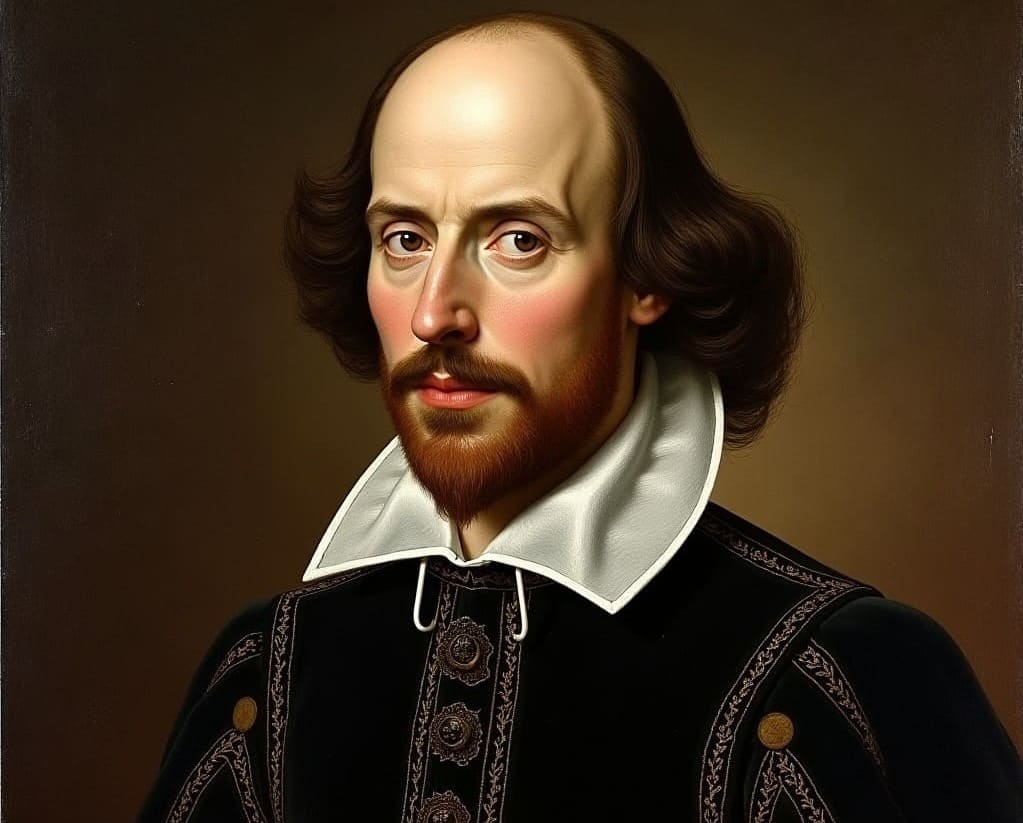
What can we glean from these 50 quotes about Shakespeare? Several recurring themes emerge:
- Universality: Whether from Ben Jonson or Maya Angelou, critics and artists alike praise Shakespeare for his wide-reaching grasp of human nature. He delves into myriad experiences—love, jealousy, power struggles, existential dread—making his works endlessly adaptable.
- Timelessness: Writers from every era, including Enlightenment thinkers like Voltaire and modern novelists like Atwood, comment on Shakespeare’s ability to transcend cultural and historical barriers. Despite the Elizabethan setting and language, his texts remain relevant because they tap into fundamental human emotions.
- Immense Influence: Many quotes note that Shakespeare’s work forms a cornerstone of modern storytelling, language usage, and character development. Critics like Bloom and Frye have gone so far as to suggest that we can’t fully understand Western literature without Shakespeare.
- Performance Vitality: Stage legends from Laurence Olivier to Helen Mirren stress that Shakespeare’s work gains life in performance. The plays were meant to be performed, not just read; the synergy between page and stage underlines the Bard’s dramatic power.
- Room for Debate: Writers like George Bernard Shaw and Voltaire criticize Shakespeare for perceived flaws or “lack of refinement,” but even these harsh critiques reinforce Shakespeare’s importance—he remains a figure too significant to ignore.
These quotes about Shakespeare highlight the vibrant tapestry of opinions that has surrounded the Bard for centuries. Far from monolithic, these perspectives reflect the diverse ways that each new generation encounters, debates, and re-envisions Shakespeare’s texts.
Modern Interpretations and Cultural Impact
The ubiquity of Shakespeare in today’s culture is undeniable. The internet age, cinematic adaptations, and global educational curricula ensure that quotes about Shakespeare continue to proliferate. From Kenneth Branagh’s sweeping film epics to high school productions of Romeo and Juliet, Shakespeare’s works remain a creative wellspring for artists and thinkers.
In pop culture, references to Shakespeare appear in everything from Disney animations (The Lion King mirrors Hamlet) to contemporary television dramas. The Bard’s works also inform modern political discourse—terms like “Macbethian ambition” or “a pound of flesh” (from The Merchant of Venice) are shorthand for complex ideas. With each new medium that emerges, Shakespeare is reshaped, reinterpreted, and re-presented to fresh audiences.
Conclusion
The vast array of quotes about Shakespeare we’ve surveyed, spanning centuries and continents, testifies to the Bard’s unmatched stature in world literature. Whether admired or critiqued, Shakespeare remains a fixture, an irresistible point of reference whenever the subject turns to the power and possibilities of the written word. His mastery of the English language, profound exploration of humanity’s moral and emotional landscapes, and aptitude for transcending cultural boundaries have earned him a near-mythic status.
As we look ahead, there’s little doubt that future writers, scholars, and performers will continue to add their voices to the ongoing conversation about Shakespeare’s place in the canon. Each generation—shaped by its own technologies, social struggles, and artistic tastes—will find new reasons to revere (or question) this literary giant. But one thing remains certain: the legacy of William Shakespeare endures, and quotes about Shakespeare will continue to illuminate not only his genius but also our evolving understanding of what it means to be human.