
Marcus Aurelius stands as a monumental figure in the history of philosophy, leadership, and personal growth. As a Roman emperor and a leading voice of Stoicism, his reflections—often called Marcus Aurelius meditations quotes—offer timeless wisdom on self-discipline, resilience, and the nature of existence. Despite centuries passing since he ruled, his words continue to guide those seeking a balanced, purposeful life. Indeed, in the realm of ancient writings, few texts resonate as powerfully today as the Marcus Aurelius meditations do.
Why do these Marcus Aurelius quotes on life still matter in modern times? In an era filled with constant distractions and challenges, his principles of focusing on the present moment, governing our reactions, and living ethically speak directly to our everyday struggles. Whether you’re facing personal setbacks, professional dilemmas, or simply yearning for a clearer perspective on what truly matters, the best Marcus Aurelius quotes can serve as guiding beacons.
In this article, we’ll explore the life of Marcus Aurelius, delving briefly into who he was and the significance of his reign. Then we’ll present fifty impactful quotes, each accompanied by insight into their meaning and practical applications for the modern reader. Finally, we’ll discuss actionable ways to incorporate these teachings into your daily life—so you can cultivate the Stoic virtues of calm, courage, and wisdom. Prepare to discover how these words, penned nearly two millennia ago, remain a steady source of guidance in today’s world.
Who Was Marcus Aurelius?
Marcus Aurelius Antoninus was born in Rome on April 26, 121 AD, into a patrician family that had close ties to the reigning emperors. Raised with a keen focus on education, philosophy, and moral discipline, he developed a lifelong affinity for the Stoic school of thought, which emphasized virtue, rationality, and emotional self-mastery. He studied under notable tutors, including the revered Stoic philosopher Rusticus, whose influence is evident in Aurelius’ later writings.
Marcus Aurelius rose to co-emperor in 161 AD, ruling alongside Lucius Verus until Verus’ death in 169 AD. From there, Aurelius governed alone, guiding the Roman Empire through numerous challenges such as military conflicts, border rebellions, and a devastating pandemic known as the Antonine Plague. Despite these tumultuous circumstances, his steadfast leadership and compassion for his people garnered him respect both at home and abroad. He remained committed to serving the common good, regularly involving himself in administrative details and striving to uphold justice and fairness throughout the empire.
His personal reflections, which we now refer to as the Marcus Aurelius meditations, were not initially written for public consumption. Instead, these notes served as a private journal where he examined his thoughts, actions, and the philosophical doctrines that guided him. In these meditations, he wrestled with questions of mortality, the importance of moral integrity, and the fleeting nature of worldly success. Centuries after his death in 180 AD, these writings were compiled and published, becoming essential reading for students of Stoicism.
Through them, Marcus Aurelius left behind a rich legacy of insight into human nature, ethical conduct, and the art of reigning both as a public figure and as master of oneself. Today, Marcus Aurelius quotes remain highly esteemed, offering solace and direction to individuals from all walks of life. In the following sections, we’ll explore the best Marcus Aurelius quotes organized by central Stoic themes, uncovering why they continue to illuminate our path centuries later.
Top 50 Marcus Aurelius Quotes and Their Meanings
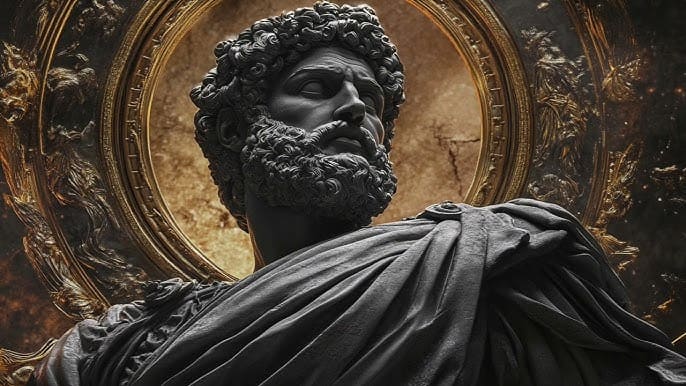
Below is a curated list of Marcus Aurelius quotes from his Meditations and other attributed sources. These lines are grouped by overarching themes—resilience, self-discipline, leadership, and mindset—so you can easily find inspiration tailored to specific challenges in your own life. Each quote is followed by a brief explanation and real-life application.
On Resilience & Overcoming Challenges
-
“You have power over your mind—not outside events. Realize this, and you will find strength.”
- Meaning: Control the narrative in your head; external circumstances can’t overwhelm you if you govern your internal state.
- Application: Practice mindfulness techniques to manage stressful situations and maintain emotional balance.
-
“The impediment to action advances action. What stands in the way becomes the way.”
- Meaning: Obstacles can be catalysts for growth. Turn adversity into an opportunity to develop resilience and creativity.
- Application: When confronted with barriers, ask yourself, “How can this hardship propel me to become stronger or more innovative?”
-
“Do not act as if you had ten thousand years to throw away. Death stands at your elbow.”
- Meaning: Life is short; procrastination and hesitation only rob us of fulfilling our potential.
- Application: Embrace urgency and purpose—take immediate steps toward your goals rather than waiting for a “perfect” time.
-
“Our actions may be impeded, but there can be no impeding our intentions or dispositions.”
- Meaning: External events can block you from doing something, but they cannot force your attitude to change unless you allow it.
- Application: Even if you’re stuck in a difficult situation, focus on keeping a positive mindset and strong moral compass.
-
“When you arise in the morning, think of what a precious privilege it is to be alive.”
- Meaning: Each day is an opportunity; recognize its value to cultivate gratitude and motivation.
- Application: Begin each morning with a brief moment of reflection or gratitude practice.
-
“Forward, as occasion offers. Never look round to see whether any shall note it.”
- Meaning: Persist forward in your endeavors without seeking validation from others.
- Application: Let go of the need for external approval; trust in your values and your plan.
-
“Loss is nothing else but change, and change is Nature’s delight.”
- Meaning: Change is inevitable—embrace it rather than fearing it.
- Application: Adopt a growth mindset; learn from every shift or transition in life.
-
“Reject your sense of injury and the injury itself disappears.”
- Meaning: Often, our interpretation of harm causes more suffering than the event itself.
- Application: When faced with conflict, focus on reframing rather than holding onto resentment or self-pity.
-
“Be like a rocky promontory against which the restless surf continually pounds.”
- Meaning: Stand firm despite challenges; let problems break upon you while you remain unshaken.
- Application: Visualize yourself as stable and enduring during chaotic or stressful experiences.
-
“Everything that happens is either endurable or not. If it’s endurable, then endure it.”
- Meaning: Distinguish between what can be handled and what cannot; accept the former gracefully.
- Application: Avoid needless worry by assessing the real threat of any situation and calmly deciding how to proceed.
On Self-Discipline & Personal Growth
-
“Waste no more time arguing about what a good man should be. Be one.”
- Meaning: Action outweighs theory. Strive to embody virtue rather than merely discussing it.
- Application: Focus on consistent behavior aligned with your moral values.
-
“Dwell on the beauty of life. Watch the stars, and see yourself running with them.”
- Meaning: Appreciate life’s vastness and your integral place within it.
- Application: Practice wonder and gratitude daily—look up at the sky, take nature walks, or keep a gratitude journal.
-
“Confine yourself to the present.”
- Meaning: Don’t get lost in regrets of the past or worries for the future. Live fully in the now.
- Application: Incorporate mindfulness exercises like focusing on your breath or immediate tasks.
-
“If it is not right, do not do it; if it is not true, do not say it.”
- Meaning: Clear moral guidelines can steer you away from wrongdoing.
- Application: Before taking an action or speaking, pause to assess its ethical foundation.
-
“Stop letting your mind be a slave, dragged along by selfish impulses.”
- Meaning: Guard your mind against negative habits or fleeting desires that lead to harm.
- Application: Identify personal triggers—anger, envy, procrastination—and develop better coping mechanisms.
-
“Look inward; within is the fountain of good.”
- Meaning: Self-reflection is key to virtuous action and clarity of purpose.
- Application: Use journaling or meditation to discover inner strengths and to refine your character.
-
“The soul becomes dyed with the color of its thoughts.”
- Meaning: The nature of your thoughts affects who you are.
- Application: Practice replacing self-defeating thoughts with affirming, growth-oriented perspectives.
-
“Nowhere can man find a quieter or more untroubled retreat than in his own soul.”
- Meaning: Inner peace does not rely on external surroundings; it is cultivated from within.
- Application: When stress looms, set aside time for introspection rather than searching for distractions.
-
“Be tolerant with others and strict with yourself.”
- Meaning: Show compassion and patience to those around you, but hold yourself to high moral standards.
- Application: Set personal rules for ethical conduct while practicing empathy toward others.
-
“Do every act of your life as though it were the last act of your life.”
- Meaning: Live each moment with intention and excellence, as time is fleeting.
- Application: Use daily reminders—sticky notes, timers, or affirmations—to remain present and diligent.
On Leadership & Duty
-
“The best revenge is not to be like your enemy.”
- Meaning: Rise above pettiness and cruelty by holding firm to your virtues instead of mirroring ill deeds.
- Application: In disputes—professional or personal—respond with integrity rather than retaliation.
-
“It is not death that a man should fear, but he should fear never beginning to live.”
- Meaning: Real tragedy lies in an unlived life, not in mortality itself.
- Application: Embrace opportunities that align with your values; don’t let fear paralyze you.
-
“When you have assumed these names—good, modest, truthful, rational, a man of equanimity—take care that you do not change these names.”
- Meaning: If you claim certain virtues, be sure your actions consistently reflect them.
- Application: Think of the roles you assume—leader, mentor, friend—and act in ways that honor those labels.
-
“A person’s worth is measured by the worth of what he values.”
- Meaning: You’re defined by the principles and priorities you hold dear.
- Application: Reflect on whether your daily pursuits align with your core values and higher purpose.
-
“If it is endurable, then endure it. Stop complaining.”
- Meaning: Complaints achieve little; focus on constructive action in the face of adversity.
- Application: In leadership roles, set an example by channeling concerns into solutions rather than grumbling.
-
“Adapt yourself to the things among which your lot has been cast.”
- Meaning: Leaders should navigate circumstances with flexibility, maximizing what they can control.
- Application: Identify the resources and constraints within your environment. Work creatively within them.
-
“No man is happy who does not think himself so.”
- Meaning: Happiness hinges on your perception, not external achievements.
- Application: Cultivate contentment through gratitude and realistic expectations, especially when overseeing others.
-
“Men exist for the sake of one another. Teach them or endure them.”
- Meaning: As social beings, we should guide or tolerate others, not merely judge them.
- Application: In teams or families, focus on mutual support and shared growth, offering constructive feedback.
-
“Look well into thyself; there is a source of strength which will always spring up.”
- Meaning: Leaders must trust in their inner resources, which are inexhaustible if properly developed.
- Application: During times of crisis, pause to reflect on past successes or skills that can guide you forward.
-
“Perform every act in life as though it were your last.”
- Meaning: A variation of a previous quote, emphasizing responsible, wholehearted action as a moral duty.
- Application: Keep your legacy in mind when making decisions, ensuring each choice reflects your best self.
On Mindset & Perspective
-
“If you are distressed by anything external, the pain is not due to the thing itself, but to your estimate of it; and this you have the power to revoke at any moment.”
- Meaning: Emotional suffering arises from internal judgments, which you can alter.
- Application: Practice reframing situations—focus on what you can learn rather than what you lose.
-
“The happiness of your life depends upon the quality of your thoughts.”
- Meaning: Choose thoughts that promote well-being and clear-mindedness.
- Application: Develop a habit of positive self-talk, especially during tough times.
-
“How ridiculous and how strange to be surprised at anything which happens in life!”
- Meaning: Everything is part of the natural order. Accepting this reduces shock and stress.
- Application: Cultivate a sense of acceptance; adapt swiftly to new developments instead of lamenting them.
-
“He who follows reason in all things is both tranquil and active at the same time.”
- Meaning: Rational thinking leads to calm decisiveness, avoiding emotional extremes.
- Application: When faced with decisions, systematically evaluate pros and cons rather than reacting impulsively.
-
“A wrongdoer is often a person who has left something undone, not always he who has done something.”
- Meaning: Neglecting one’s responsibilities can be as harmful as actively committing wrongdoing.
- Application: Take responsibility for omissions—follow through on promises and tasks.
-
“The universe is change; our life is what our thoughts make it.”
- Meaning: Since everything around us shifts constantly, maintaining a good mindset is key to well-being.
- Application: Accept impermanence and concentrate on keeping an adaptable, positive attitude.
-
“Be content to seem what you really are.”
- Meaning: Authenticity is more valuable than projecting a facade.
- Application: Resist social pressure to conform; stay honest about your strengths and flaws.
-
“Do not indulge in dreams of having what you have not, but reckon up the chief of the blessings you do possess.”
- Meaning: Yearning excessively for what you lack breeds discontent; focus on your existing blessings.
- Application: Make gratitude lists to keep your mind attuned to abundance instead of scarcity.
-
“Look not around at the depraved morals of others, but run straight along the line without deviating from it.”
- Meaning: Don’t be distracted by others’ failings; concentrate on your own path.
- Application: Steer clear of gossip or comparisons; stay focused on personal improvement.
-
“The universe is transformation; life is opinion.”
- Meaning: All things change, and your perception shapes your reality.
- Application: Regularly reassess your opinions—are they rooted in truth or shaped by fear?
Additional Reflections
These last ten Marcus Aurelius quotes on life broaden the Stoic perspective on mortality, virtue, and our place in the grander scheme of things.
-
“Death smiles at us all; all we can do is smile back.”
- Accept mortality and keep living with courage and grace.
-
“When you have trouble getting out of bed in the morning, remember that your purpose is to help others.”
- Reminds us that duty and love for others can fuel our motivation.
-
“The art of living is more like wrestling than dancing.”
- Life can be combative and requires grit, adaptability, and resilience.
-
“Think of yourself as dead. You have lived your life. Now take what’s left and live it properly.”
- A Stoic exercise for appreciating the time you still have.
-
“A man’s worth is no greater than the worth of his ambitions.”
- Encourage high and noble goals for a meaningful life.
-
“Everything we hear is an opinion, not a fact. Everything we see is a perspective, not the truth.”
- Reminds us to question assumptions and remain open-minded.
-
“Remember that man lives only in the present, in this fleeting instant.”
- Ground yourself in the here and now to make the most of it.
-
“Because a thing seems difficult for you, do not think it impossible for anyone to accomplish.”
- Challenges can be overcome with perseverance; don’t underestimate human potential.
-
“Receive without pride, let go without attachment.”
- Approach both gains and losses with equanimity and humility.
-
“No one can hinder you from living as your nature requires. Nothing can happen to you that is not in accord with nature.”
- Your true essence remains unassailable if you stay aligned with virtue and reason.
How to Apply Marcus Aurelius’ Wisdom in Daily Life

Embracing Marcus Aurelius quotes is more than reading them—it’s about living them. Here are actionable strategies for integrating his Stoic principles into everyday routines:
-
Morning Reflection: Upon waking, recall at least one quote—perhaps “You have power over your mind…”—to set a thoughtful tone for the day. Commit to applying that idea, whether it’s remaining calm in traffic or avoiding negative self-talk.
-
Journaling: Keep a small notebook and jot down any reactions to challenges, along with a relevant Marcus Aurelius meditations quote that helped you navigate that situation. This habit builds a reservoir of wisdom tailored to your life.
-
Mindfulness Breaks: At least once a day, pause for a minute to bring your attention back to the present. Think about the insight from quotes like “Confine yourself to the present.” Ask yourself if your thoughts align with this principle.
-
Gratitude & Perspective: Marcus Aurelius often emphasized gratitude for the simplest blessings. Before bed, list three things you’re thankful for. By consciously noting your gains, you naturally reduce fixations on what’s lacking.
-
Self-Audit: Periodically assess if your actions match the virtues you claim—kindness, honesty, resilience. Draw from quotes like “Waste no more time arguing about what a good man should be. Be one.”
-
Negative Visualization: A classic Stoic exercise is to imagine losing something you value—health, a relationship, or material comfort. This technique, hinted at throughout Stoic texts, helps you appreciate the present while preparing mentally for potential hardships.
-
Service-Oriented Goals: Marcus Aurelius consistently viewed community and contribution as essential. Align your personal and professional goals with the question, “How does this benefit the greater good?”
By weaving these practices into your daily schedule, you shift from passive reading of best Marcus Aurelius quotes to active embodiment of Stoicism. Over time, these methods can cultivate resilience, leadership, and a balanced perspective—hallmarks of a truly Stoic life.
Conclusion
Marcus Aurelius remains a guiding star for anyone seeking clarity and composure in a turbulent world. His legacy as both an emperor and a Stoic philosopher underscores the practicality of these teachings—if they worked in the high-stakes environment of ancient Rome, they can certainly offer robust support for modern-day challenges. Through Marcus Aurelius quotes on life, we glean lessons on humility, perseverance, and moral fortitude. By adopting even a fraction of his wisdom, we can nurture a mindset capable of withstanding life’s storms and remaining tethered to our highest values.
From resilience and personal growth to leadership and gratitude, each of these 50 quotes serves as a timeless reminder: the best version of yourself isn’t waiting in some distant future, but is available here and now, shaped by your choices and mindset. Let this article be your entry point into Stoicism—or a deepening of an existing journey toward greater wisdom and equanimity.
Now, it’s your turn. Share your favorite Marcus Aurelius quote—whether one from this list or something else from the Marcus Aurelius meditations—in the comments or on social media. May his reflections continue to inspire fortitude, kindness, and unwavering resolve in all of us.