
Before we dive into these James K Polk quotes, it is important to understand the era in which he lived. Born in North Carolina and raised in Tennessee, Polk was mentored by Andrew Jackson—another Tennessean who championed the rights of the “common man” while aggressively expanding presidential power. Polk, however, brought his own style of leadership to the White House.
- Political Rise: He served as Speaker of the House (1835–1839) and Governor of Tennessee (1839–1841) before winning the presidential election of 1844 against Whig opponent Henry Clay.
- Campaign Promises: Polk was an advocate of “Manifest Destiny,” reflecting the widely held belief that the United States was destined to expand across the North American continent. He promised to address the Oregon boundary issue, annex Texas, reduce tariffs, and establish the Independent Treasury.
- Presidency in Action: During his single term, he led the nation through the Mexican–American War (1846–1848), negotiated territorial expansions that included much of the modern American Southwest, and lowered the tariff, staying true to many of his campaign pledges.
Polk’s words, found in letters, speeches, diaries, and official statements, reveal a president intensely focused on achieving his policy goals. While some of these James Polk quotes celebrate expansionist zeal, others illuminate the diplomatic tightropes he walked. Let’s begin by looking at his statements on national expansion, foreign affairs, and the responsibilities he believed came with the presidency.
- Top 50 James K. Polk Quotes
- On Manifest Destiny and Expansion
- On the Mexican–American War
- On the Presidency and Executive Power
- On Democracy, Governance, and the People
- On Legacy, Morality, and Personal Reflection
- Polk’s Presidency in Context: Achievements, Controversies, and Lasting Influence
- Analyzing the Impact of James K. Polk Quotes and Philosophy
- Conclusion: Lessons from the “Dark Horse” President
Top 50 James K. Polk Quotes
To give structure, the quotes are grouped by theme. Each cluster of 10 quotes highlights a central aspect of Polk’s political or personal worldview.
On Manifest Destiny and Expansion
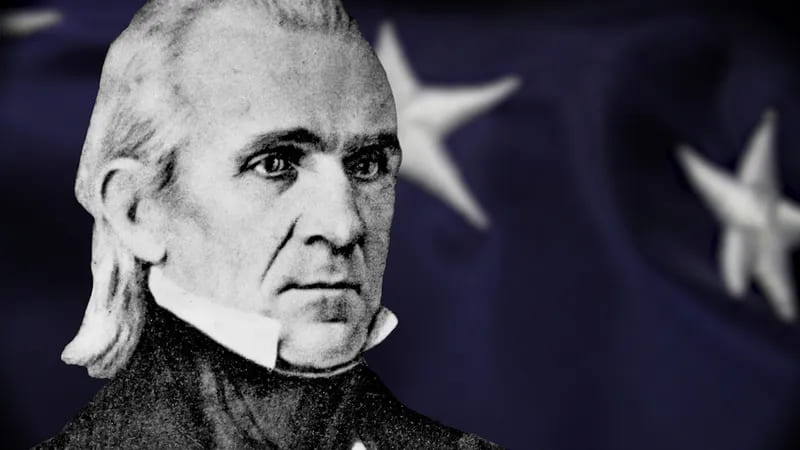
- “The world must be made to know that our government is determined to protect the rights of its citizens, wheresoever they may be.”
Commentary: Polk’s presidency coincided with intense westward expansion. Here, he underscores the idea that U.S. citizens abroad—and across new territories—should be firmly supported. - “It is my duty to see the national domain extended; it is the nation’s destiny to expand and flourish.”
Commentary: One of the most direct James K Polk quotes expressing his unwavering belief in Manifest Destiny. - “Every foot of our territory should be held and governed by American laws for American citizens.”
Commentary: Reflective of the 19th-century mindset that American governance and law were superior systems, thus justifying expansion. - “Our title to the whole of the Oregon Territory is clear and unquestionable.”
Commentary: On the Oregon dispute with Great Britain. Though he initially demanded the 54°40′ line, he later settled at the 49th parallel. - “I have always considered the annexation of Texas as essential to the Union.”
Commentary: Polk inherited the Texas issue from John Tyler, but he embraced it fully, seeing the region as strategically vital. - “Democracy flourishes when its territories grow, providing opportunities for our people to prosper.”
Commentary: A broad reflection on why he believed expansion would benefit the average American citizen. - “Negotiation is preferable to war, but let no foreign power consider us weak or hesitant to defend our claims.”
Commentary: Polk’s stance on diplomacy versus conflict, indicating he was willing to fight if peaceful negotiation failed. - “The American people have willed that we occupy the continent; I execute their will.”
Commentary: Reflects his view that his expansionist policies were a direct mandate from American voters. - “To limit our settlements is to deny the full realization of our nation’s promise.”
Commentary: A philosophical take on why restricting territorial growth might impede America’s economic and social potential. - “The nation’s destiny is inseparable from its frontiers.”
Commentary: Summarizes Polk’s unshakable conviction that a growing America was a stronger America, economically and politically.
On the Mexican–American War
- “War is always a lamentable last resort, but our demands have been disregarded.”
Commentary: Polk publicly justified the war with Mexico, framing it as a response to perceived injustices. - “We must support our troops in the field and provide them with every resource to secure peace through victory.”
Commentary: Demonstrates how he believed military success was crucial for diplomatic leverage. - “In declaring war, we assert our right to defend the honor and security of the nation.”
Commentary: This statement hints at Polk’s emphasis on national honor, a significant factor in mid-19th-century foreign policy. - “A swift, decisive engagement will shorten the conflict and save lives.”
Commentary: Polk hoped for a quick resolution, reflecting concern for the human cost of prolonged warfare. - “Let us not shirk from the burden history has placed on our shoulders; our cause is just.”
Commentary: Polk frames the war as historically inevitable, tying it to broader themes of Manifest Destiny. - “Our adversary refuses to negotiate in good faith, leaving us no alternative but force.”
Commentary: Polk’s administration regularly argued that Mexico’s refusal to accept the U.S. position on Texas and border issues forced military action. - “In the final settlement, we must secure boundaries that ensure our future stability.”
Commentary: Even before the end of the war, Polk envisioned a peace treaty that included substantial new territories for the United States. - “Let no man question our motives; we fight for peace, prosperity, and our rightful domain.”
Commentary: An appeal to American patriotism and moral righteousness during the conflict. - “Conquest, when borne of necessity, paves the way for a more durable harmony.”
Commentary: Polk’s idea that territorial acquisitions could ultimately stabilize North America. - “The peace we forge must benefit American interests, but it must also be honorable.”
Commentary: Suggests that Polk did see moral dimensions to foreign policy, though critics often argue that the war was an opportunistic land grab.
On the Presidency and Executive Power
- “The office of President must be executed with diligence, honesty, and unwavering resolve.”
Commentary: Polk was known for his intense work ethic; this statement underscores his sense of duty. - “I shall fulfill my campaign pledges, for the people’s trust is sacred.”
Commentary: One of the rare presidents who completed virtually all major promises he made during the campaign. - “Efficiency in government demands constant supervision by the Executive.”
Commentary: Reflects Polk’s managerial style. He kept a close eye on cabinet members and bureaucrats. - “One term is sufficient to accomplish great things if one is focused and purposeful.”
Commentary: Polk famously pledged he would serve only one term—and he kept that promise. - “The Executive must not shrink from directing the nation’s energies toward higher aims.”
Commentary: Polk’s justification for an active presidency, consistent with the Jacksonian tradition of strong executive leadership. - “In times of crisis, the nation looks to the President for guidance and resolve.”
Commentary: Reflects the 19th-century view that the President was the embodiment of national will. - “Cabinet disagreements must yield to the greater good of the nation.”
Commentary: Polk’s leadership style was authoritative—he expected unity and swift implementation of policies. - “A president’s reputation rests on tangible deeds rather than lofty words.”
Commentary: Despite being an orator when necessary, Polk valued concrete achievements like territorial expansion and policy reforms. - “The people judge not by how long you hold office, but by what you achieve in the time allotted.”
Commentary: A testament to how he measured success, focusing on outcomes rather than longevity in politics. - “The Constitution vests in me the power to act decisively for the Union’s welfare; I shall not hesitate to use it.”
Commentary: Reveals Polk’s readiness to employ the full constitutional scope of the presidency—seen in his quick moves on war and territory.
On Democracy, Governance, and the People
- “Our institutions thrive when the people are vigilant in protecting their liberties.”
Commentary: Hints at a Jacksonian belief in the power of the common man to guard democracy. - “Representation in government is a public trust that demands integrity above all.”
Commentary: Polk saw political service as fundamentally rooted in responsibility to constituents. - “Partisan zeal must never overshadow the nation’s best interests.”
Commentary: A call, at least in principle, for bipartisan cooperation—a tall order in any era. - “No government can long endure if it neglects the voice of its working men and women.”
Commentary: Reflects a populist inclination common to Jacksonian Democrats, championing the average citizen. - “The people’s will, not personal ambition, should steer the ship of state.”
Commentary: A direct critique of politicians who, in Polk’s view, placed self-interest above the public good. - “Laws, once enacted by proper authority, must be enforced with fairness and firmness.”
Commentary: Demonstrates Polk’s respect for the rule of law and the responsibilities of the federal government. - “A well-informed populace is the bulwark of liberty.”
Commentary: Echoing Enlightenment ideals, Polk emphasized that democracy relies on educated and engaged citizens. - “The dynamic nature of our Constitution allows us to address modern needs without forsaking our founding principles.”
Commentary: Suggests a belief that the Constitution was flexible enough to accommodate a rapidly expanding nation. - “Government must remain accessible, that the humblest citizen can seek redress for grievances.”
Commentary: Refers to the Jacksonian tenet that democracy should be inclusive and approachable. - “Where the people lead, leaders must follow.”
Commentary: Summarizes Polk’s perception of democracy as a system in which officials channel the electorate’s will rather than impose their own.
On Legacy, Morality, and Personal Reflection
- “History will judge the fruits of my administration, but I trust it will be said I served faithfully.”
Commentary: Polk was acutely aware of how future generations would assess his presidency. - “A president who upholds the Constitution and safeguards the Union’s prosperity has done his duty.”
Commentary: His straightforward metric for success in office. - “Life in high office demands sacrifice, but the rewards of service to our Republic are immeasurable.”
Commentary: Reflects a sense of calling, even if it came at great personal cost. - “Let no man, at life’s end, say I failed to act when action was required.”
Commentary: Polk was decisive, arguably more so than many presidents who served longer terms. - “The most sacred bond between a president and the people is honesty.”
Commentary: Indicates his moral standpoint on maintaining public trust, though his critics questioned aspects of his transparency regarding the war. - “I have sought no glory but that which advances our beloved country.”
Commentary: A humble or self-justifying statement, depending on one’s perspective. - “To burden future generations with unfinished work would be a disservice to the office I hold.”
Commentary: Emphasizes why he was so intent on resolving issues like the Oregon boundary and the Texas question within one term. - “The American experiment in self-government remains fragile; each leader must strengthen its foundations.”
Commentary: A cautionary note that democracy is not guaranteed but must be constantly nurtured. - “Ambition, guided by virtue, can accomplish great ends.”
Commentary: Polk believed strongly in ambitious policies—but always couched them in public virtue. - “I have done my duty as best I could; may future citizens enjoy the blessings of our labor.”
Commentary: A valedictory tone, consistent with his decision not to seek a second term and to place faith in the nation’s onward march.
Polk’s Presidency in Context: Achievements, Controversies, and Lasting Influence
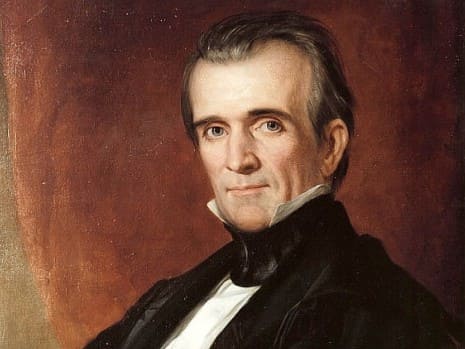
The James Polk quotes above paint a vivid portrait of a president who was both unapologetically expansionist and deeply committed to the country’s perceived destiny. His administration marked a turning point in America’s march across the continent, shaping the map of the modern United States. Key accomplishments and controversies include:
- Territorial Expansion
- Under Polk, the United States acquired approximately one-third of its current territory. This included the Oregon Territory south of the 49th parallel, as well as California, Nevada, Utah, Arizona, New Mexico, and parts of Colorado and Wyoming via the Mexican Cession.
- These acquisitions came at a cost—strained relations with Mexico, intense debates over slavery expansion, and conflicts with Indigenous peoples who were displaced or severely impacted by new land policies.
- Mexican–American War (1846–1848)
- Initiated under Polk’s watch, the war ended with the Treaty of Guadalupe Hidalgo. The United States paid $15 million to Mexico, but the annexation of such vast territories fueled North-South tensions over the extension of slavery.
- Domestic Policies and Economic Vision
- Polk lowered tariffs through the Walker Tariff of 1846, a move supported by Southern and Western agrarian interests but opposed by many in the industrializing North.
- He re-established the Independent Treasury System, aiming for a stable federal financial mechanism separate from private banks. This was a continuation of Jacksonian distrust of centralized banking.
- One-Term Presidency
- Unlike many politicians of his era, Polk vowed not to seek a second term. By retiring immediately after his presidency, he cemented a unique legacy: a leader who fulfilled nearly all his major campaign promises within four years, then stepped away from power.
- Sadly, Polk died shortly after leaving office, at just 53 years old. His intense work habits and the stress of managing a war likely contributed to his declining health.
- Enduring Legacy
- Historians often rank Polk favorably for his effectiveness, particularly in meeting his policy goals. However, they also debate the morality of his expansionist policies and the war with Mexico.
- The question of slavery’s extension into newly acquired territories set the stage for the sectional conflicts that would erupt into the Civil War less than two decades later.
Analyzing the Impact of James K. Polk Quotes and Philosophy
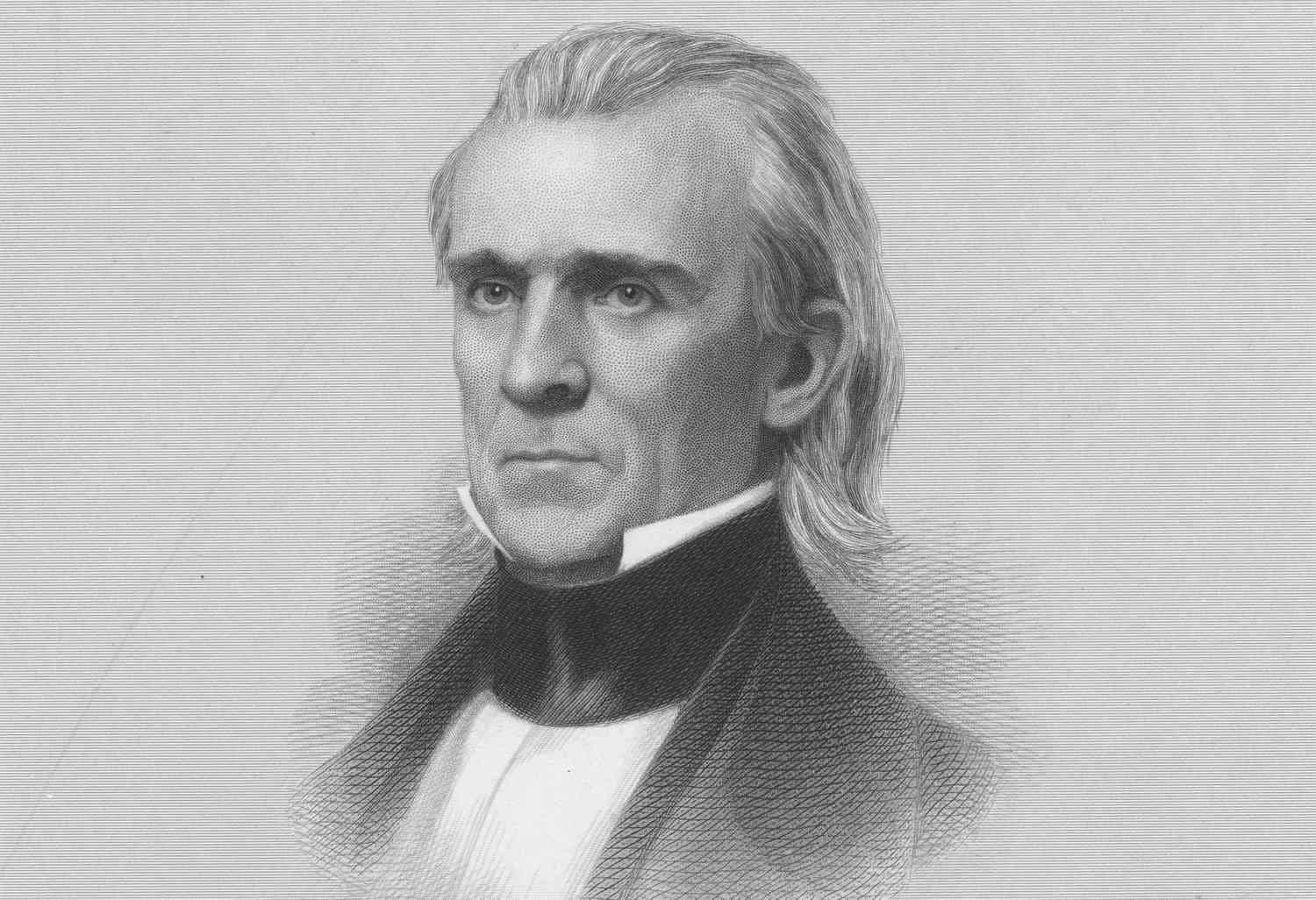
Reviewing these James Polk quotes offers a window into the ethos of mid-19th-century American leadership. Polk embodied what many at the time saw as rightful ambition—securing and extending the nation’s borders to realize what was popularly called Manifest Destiny. He championed the idea that the United States had a special mission to spread democracy and civilization, although this came at the expense of Indigenous communities and stoked a fierce national argument over slavery’s expansion.
- Decisive Governance: Polk’s quotes consistently underscore his belief in strong presidential direction. His approach influenced later presidents who also embraced assertive executive power (e.g., Abraham Lincoln, Theodore Roosevelt).
- Moral Certainty: Like many leaders of his day, Polk spoke with unwavering conviction about the rightness of American expansion. Critics, including politicians like Henry Clay, warned of the dangers of overreach and the moral quandaries tied to taking land from Mexico and displacing Native peoples.
- Unity of Purpose: Through his diaries and speeches, Polk stressed that the Executive and the legislature should work in tandem for the nation’s good. While he frequently locked horns with Whigs who opposed his war policy or tariff reforms, he still managed to pass key legislation.
- Public Service and Accountability: Several of Polk’s statements highlight his sense of accountability—he believed in fulfilling campaign pledges and the trust bestowed upon him by voters. This principle, while laudable, also fueled an aggressive timeline to achieve expansion before his term ended.
By studying these James Polk quotes, contemporary readers can reflect on the interplay between ambition and principle in political leadership. On the one hand, Polk’s efficiency and clarity of vision are qualities many modern leaders strive to emulate; on the other, his commitment to expansion at all costs can serve as a cautionary tale about the ethical dimensions of territorial and military pursuits.
Conclusion: Lessons from the “Dark Horse” President
James K. Polk’s presidency remains a paradox: he delivered on nearly every campaign promise, significantly enlarged the United States, and managed to do it all within a single term—yet controversies surrounding the Mexican–American War and the moral implications of expansion continue to cast shadows on his legacy. His short but momentous presidency stands as a testament to how quickly the nation can transform under determined leadership.
The James K Polk quotes we have examined illustrate a leader who believed deeply in America’s potential. Whether one admires or condemns his actions, Polk’s own words reveal a statesman convinced he was steering the country toward greatness, often heedless of the sacrifices required. His story invites us to weigh the costs and benefits of rapid national growth and to consider how a president’s decisions echo through history, reshaping political landscapes and moral debates for generations.
As modern America grapples with questions about foreign policy, executive power, and national identity, the life and times of James K. Polk remain startlingly relevant. His presidency prompts reflection on how leaders balance ambition with ethical responsibility, how they interpret the public mandate, and how they address the complex intersections of democracy, expansion, and justice. Ultimately, Polk reminds us that history is neither a simple tale of heroism nor villainy—it is shaped by individuals who believe, fervently and often controversially, that they are fulfilling their nation’s destiny.