
The Mysterious Allure of Edgar Allan Poe
The name Edgar Allan Poe instantly conjures images of shadowy corridors, beating hearts beneath floorboards, and ravens perched ominously in moonlit windows. A master of the macabre, Poe carved a permanent niche in literary history with his vivid storytelling, deep emotional resonance, and an unflinching look at humanity’s darker depths. Yet Edgar Allan Poe quotes extend far beyond gloomy tales; they often bristle with surprising tenderness, philosophical insight, and a haunting beauty that resonates with modern readers as much as it did in the 19th century.
Whether you’re drawn by Edgar Allan Poe love quotes or craving to revisit Edgar Allan Poe famous quotes that highlight his fascination with mortality and madness, exploring his words can feel like stepping into an ancient crypt—where every echo stirs the imagination. From lines that drip with romantic longing to biting reflections on the fragility of life, Poe’s language continues to shape how we talk about horror, love, and the intangible secrets of the human psyche.
Why Poe’s Words Still Matter
Although best known for classic stories like The Tell-Tale Heart or The Raven, Poe’s influence transcends the genre of horror. His commentary on themes like isolation, existential dread, and the pursuit of beauty have universal appeal. He was among the first American writers to blend intense emotion with a style that prized melody and lyricism. Those qualities make quotes from Edgar Allan Poe a potent source of inspiration—be it for writers seeking to refine their craft, romantics longing for raw expressions of affection, or curious readers in search of deeper truths about the mind and heart.
In the following sections, we’ll delve into 50 of the best Edgar Allan Poe quotes—some beloved, some lesser-known—to unravel the complexity and lasting power behind his words.
Who Was Edgar Allan Poe?
A Brief Biography
Born on January 19, 1809, in Boston, Edgar Allan Poe endured a tumultuous childhood marked by personal tragedy. Orphaned at a young age, he was raised by foster parents, the Allans, in Virginia. Financial woes and academic disputes characterized his early adulthood, propelling him toward literary pursuits for income. Though initially recognized as a harsh literary critic, Poe’s real fame blossomed through short stories—like “The Fall of the House of Usher”—and poems such as “The Raven,” which cemented him as a leading figure in American Romanticism.
Despite his professional success, his personal life was plagued by sorrow—his wife, Virginia, died young, exacerbating Poe’s struggles with depression and ill health. He eventually died under mysterious circumstances in 1849, leaving a legacy that fused poetic grace with grim intensity. This duality is at the heart of many famous Edgar Allan Poe quotes—a constant interplay between the beautiful and the macabre.
Central Themes in His Work
Poe’s stories and poems revolve around death, regret, love, and sometimes the supernatural. He excelled at unmasking the terrors lurking within human consciousness. Yet simultaneously, he crafted lines so moving and delicate that they can serve as some of the greatest Edgar Allan Poe quotes about love ever penned. This emotional scope is testament to the multi-faceted nature of Poe: a dreamer obsessed with life’s fleeting nature, but also a romantic searching for solace in beauty.
Contemporary audiences may see him primarily as a horror luminary, but Poe was also a pioneer in detective fiction and a forerunner of modern psychological thrillers. Even now, new generations discover the eeriness in “The Raven” or the intense longing in “Annabel Lee.” Through these works, quotes by Edgar Allan Poe continue to echo a sense of awe, bridging centuries between their original publication and our present day.
Top 50 Edgar Allan Poe Quotes
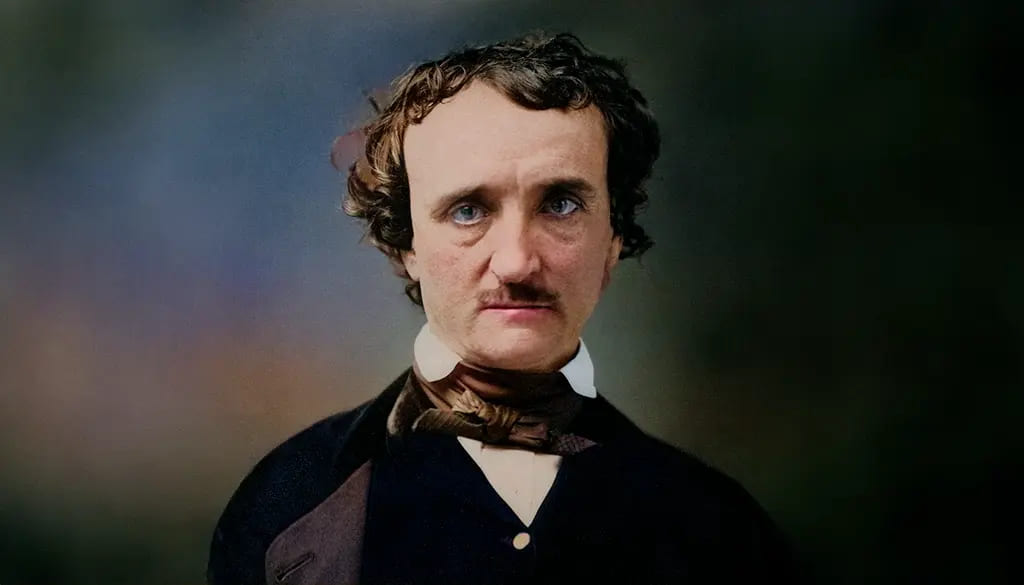
Below is a curated selection of 50 quotes capturing the essence of Poe’s literary craft—his fixation on mortality, the fragility of love, the labyrinth of the mind, and everything in between. To help you explore them thoroughly, we’ve divided these lines into four thematic categories: Dark & Macabre, Romantic & Loving, Philosophical & Reflective, and Life & Legacy. Each excerpt features a short context or reflection on its broader significance.
A) Dark & Macabre: Confronting the Shadows
-
“Even in the grave, all is not lost.” – The Pit and the Pendulum
-
Context: Reflecting on the idea that consciousness, or fear, might persist beyond death’s boundary.
-
Why It’s Chilling: Poe often proposed that the final separation between life and afterlife might not be clean or final.
-
-
“The boundaries which divide Life from Death are at best shadowy and vague.” – The Premature Burial
-
Context: From Poe’s obsession with being buried alive, he underscores how easily the living might be mistaken for the dead.
-
Application: Perfect for capturing the uncanny fear of crossing lines we consider inviolable.
-
-
“I became insane, with long intervals of horrible sanity.” – Attributed to Poe, though sometimes debated
-
Context: The line reveals how Poe might have perceived the burden of hyper-awareness or mental turmoil.
-
Why It Resonates: Taps into universal feelings of madness creeping in, or the madness lurking behind everyday rationality.
-
-
“The scariest monsters are the ones that lurk within our souls.” – Paraphrase from Poe’s philosophical stance
-
Context: Not a direct textual quote, but reflects a sentiment gleaned from his body of work, especially in stories like The Black Cat.
-
Why It Resonates: Summarizes how Poe believed our internal guilt or secrets can be more horrifying than external threats.
-
-
“I dread the events of the future, not in themselves but in their results.” – The Fall of the House of Usher
-
Context: A line that addresses existential fear of consequences—common in Poe’s narratives.
-
Use: Ideal for exploring psychological dread.
-
-
“Deep into that darkness peering, long I stood there, wondering, fearing, doubting…” – The Raven
-
Context: Among the most famous Edgar Allan Poe quotes from his iconic poem.
-
Why It’s Iconic: Mirrors the human condition: curiosity battling dread in the quiet hours of night.
-
-
“That horror was the soul of the plot.” – The Masque of the Red Death
-
Context: Reflects on how fear and mortality drive the story’s tension.
-
Significance: Poe consistently used horror as a lens to reveal deeper truths.
-
-
“Men have called me mad; but the question is not yet settled.” – The System of Dr. Tarr and Prof. Fether
-
Context: Another reflection on the thin line between madness and sanity.
-
Use: Summarizes Poe’s repeated theme that madness is subjective, ambiguous.
-
-
“Because it was my crime to have no one on Earth who cared for me.” – Berenice
-
Context: Emphasizes isolation as a kind of existential anguish fueling terror.
-
Why It’s Sad: Poe’s own life had parallels of loneliness and loss.
-
-
*“I was never really insane except upon occasions when my heart was touched.” – Paraphrased Poe
-
Context: Possibly deriving from his expressions on emotional extremes.
-
Use: Highlights how heartbreak or extreme passion can unravel mental stability.
-
B) Romantic & Loving: The Heart in Poe’s World
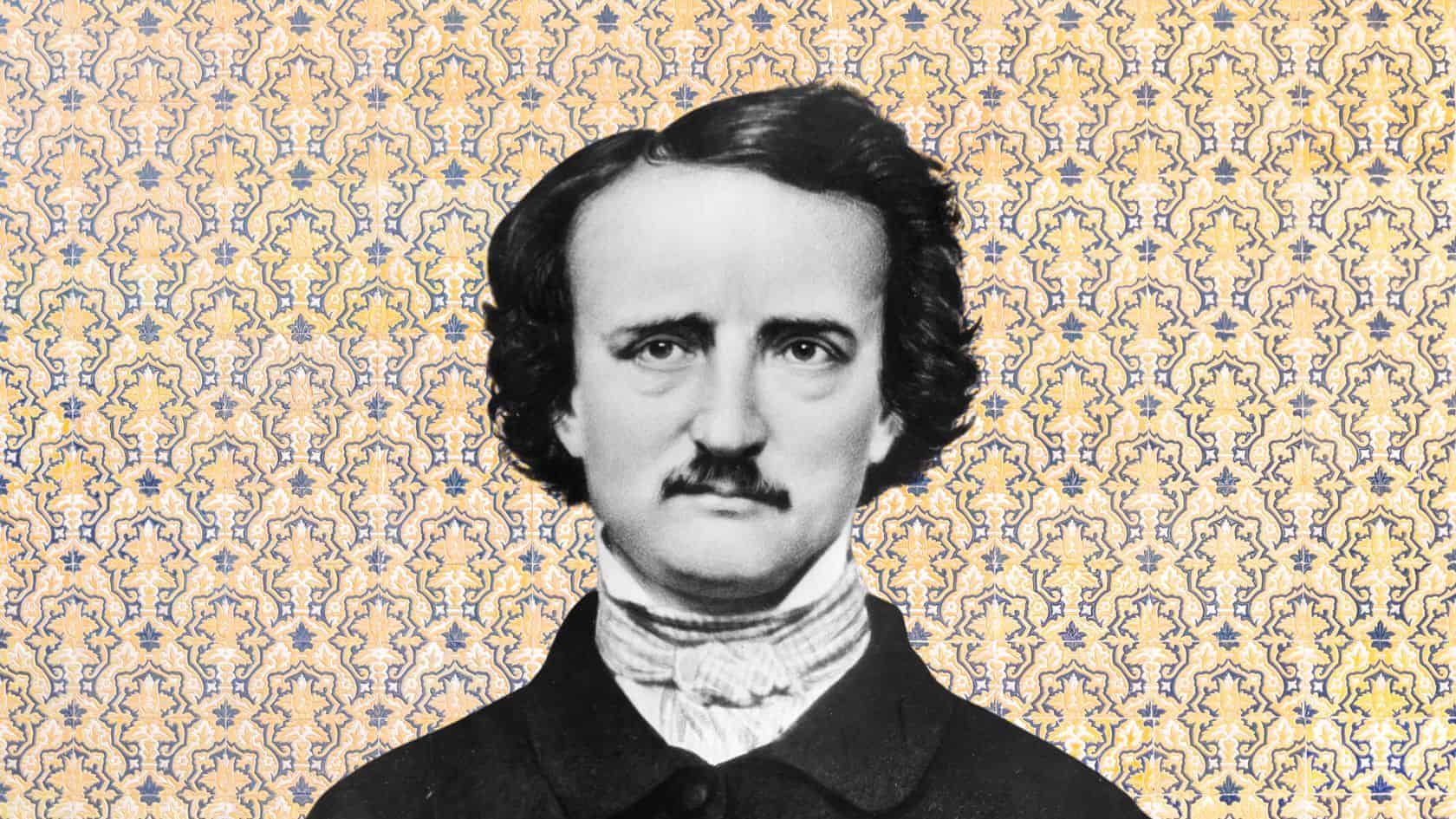
Contrary to popular assumption, there are a number of Edgar Allan Poe love quotes that showcase tenderness, longing, and depth of affection in his writing.
-
“We loved with a love that was more than love.” – Annabel Lee
-
Context: Possibly the most iconic romantic line by Poe, from a poem about undying devotion despite death.
-
Why It’s Classic: Epitomizes the intense passion that soared above mortal constraints.
-
-
“From childhood’s hour I have not been / As others were—” – Alone
-
Context: Reveals Poe’s sense of solitude, but also his capacity for unique emotional breadth.
-
Why It Resonates: Tied to his longing for deep connection, forming a poignant backdrop for romantic lines.
-
-
“For the moon never beams without bringing me dreams / Of the beautiful Annabel Lee.” – Annabel Lee
-
Context: Poetry about love transcending the grave, bridging heartbreak with dreamlike devotion.
-
Use: A prime example of Edgar Allan Poe quotes about love that defy mortality.
-
-
“In the Heaven’s above, / And in the graves below, / I love you still and always will.” – Paraphrased from Annabel Lee
-
Context: Another snippet capturing that unstoppable love.
-
Significance: Portrays devotion that no cosmic boundary can sever.
-
-
“And so, being young and dipped in folly, I fell in love with melancholy.” – Paraphrased from Tamerlane
-
Context: Poe acknowledging the bittersweet attraction to sorrow or intense emotion.
-
Why It’s Romantic: Reflects the allure of deep feeling, even if that feeling is tinged with sadness.
-
-
“All that we see or seem is but a dream within a dream.”
-
Context: Though not purely romantic, it can be read as a reflection on ephemeral illusions, including love’s dreamlike quality.
-
Use: Ties existential wonder with potential romantic illusions.
-
-
“At midnight, in the month of June, I stand beneath the mystic moon.” – The Sleeper
-
Context: Not explicitly a love line, but romantic in tone, capturing nocturnal yearning.
-
Use: Summons the hush of night, often a setting for Poe’s romantic longing.
-
-
“The fever called ‘Living’ is conquered at last.” – For Annie
-
Context: Part of a poem that addresses relief from the pain of life, with subtext of yearning.
-
Interpretation: Could also reflect a love that surpasses painful existence.
-
-
“What is it that makes us linger thus?—the fear, the dread of solitude.” – Eleonora
-
Context: Another story bridging love and the terror of losing it.
-
Why It’s Romantic: Underscores that love is a refuge from crippling aloneness.
-
-
“But our love it was stronger by far than the love / Of those who were older than we.” – Annabel Lee
-
Context: Speaks to young, undying passion outpacing conventional romance.
-
Use: Among the most famous Edgar Allan Poe quotes for wedding vows or heartfelt tributes.
-
C) Philosophical & Reflective: A Window into Poe’s Mind
While many see Poe as purely a horror writer, he also penned lines that reveal keen insight into human nature, existence, and creativity—quotes by Edgar Allan Poe that extend well beyond Gothic tales.
-
“Words have no power to impress the mind without the exquisite horror of their reality.” – The Narrative of Arthur Gordon Pym
-
Context: Explains how words must evoke genuine feeling to be impactful.
-
Use: Encourages authenticity in writing or speech.
-
-
“Science has not yet taught us if madness is or is not the sublimity of the intelligence.” – Eleonora
-
Context: Explores the link between genius and madness—common in Poe’s introspections.
-
Reflection: Stirs debate on creativity’s interplay with mental intensity.
-
-
“Believe nothing you hear, and only one half that you see.” – Paraphrased from “The System of Dr. Tarr and Prof. Fether”
-
Context: Advocates skepticism, a principle that resonates in detective or suspense genres.
-
Modern Twist: Encourages critical thinking, relevant in an era of misinformation.
-
-
“Stupidity is a talent for misconception.” – The Purloined Letter (interpretation)
-
Context: Poe’s detective mind at play— how missing the obvious can be a kind of backward skill.
-
Use: A comedic yet pointed line about misjudgment.
-
-
“I became insane, with long intervals of horrible sanity.”
-
Context: As noted, can reflect on the burden of consciousness that teeters on mania.
-
Why It’s Notable: Possibly the single most recognized statement about his mental labyrinth.
-
-
“There are some secrets which do not permit themselves to be told.” – The Man of the Crowd
-
Context: Speaks of the intangible mysteries people harbor, echoing the theme of hidden guilt.
-
Apply: Affirmation that not all truths are meant for the light.
-
-
“It will be found, in fact, that the ingenious are always fanciful, and the truly imaginative never otherwise than analytic.” – The Murders in the Rue Morgue
-
Context: Lays out Poe’s view that creativity and logical reasoning can coexist powerfully.
-
In Daily Life: Encourages balancing imaginative leaps with rational structure.
-
-
*“All religion, my friend, is simply evolved out of fraud, fear, greed, imagination, and poetry.” – Marginalia?
-
Context: A controversial or paraphrased line, reflecting Poe’s cynicism toward organized faith.
-
Why It’s Thought-Provoking: Nudges reevaluation of dogmas, though he was not necessarily anti-spiritual.
-
-
“It is by no means an irrational fancy that, in a future existence, we shall look upon what we think our present existence as a dream.” – Eureka
-
Context: Speaks to cosmic speculation, bridging science and spirituality.
-
Application: Encourages an open mind about realms beyond immediate perception.
-
-
“To elevate the soul, poetry is necessary.” – Paraphrased from Poe’s statements on poetry
-
Context: Poe believed in the spiritual dimension of poetry— that beauty can uplift the heart.
-
Use: Reinforces that creativity is a path to emotional or spiritual growth.
-
D) Life & Legacy: Mortality, Legacy, and Selfhood
-
“All that we see or seem is but a dream within a dream.” – A Dream Within a Dream
-
Context: Among the best known lines, illustrating life’s ephemeral illusions.
-
Interpretation: Encourages reflection on what’s real or intangible in daily experience.
-
-
“Those who dream by day are cognizant of many things which escape those who dream only by night.” – Eleonora
-
Context: Suggests daydreamers unlock creative or visionary states.
-
Use: Encourages harnessing imagination as a tool for insight.
-
-
*“Sleep, those little slices of death—how I loathe them.” – Attributed, though disputed
-
Context: Possibly an echo of Poe’s fear of unconsciousness equating to a rehearsal for death.
-
Why It’s Memorable: Great example of macabre hyperbole typical of Poe’s style.
-
-
“Fear of the unknown is the greatest fear of all.” – Interpretation from various works
-
Context: Summarizes the dread that underpins many Poe stories—fear emerges where knowledge is absent.
-
Why It’s Timeless: Speaks to universal anxiety about mysteries of life and beyond.
-
-
“We loved with a love that was more than love.”
-
Context: Already mentioned from “Annabel Lee,” but worth re-including for its iconic status among Edgar Allan Poe love quotes.
-
Use: Possibly the single line that best merges romantic devotion with poetic force.
-
-
“No pestilence had ever been so fatal, or so hideous.” – The Masque of the Red Death
-
Context: A reflection on unstoppable pandemics, bridging fiction and real fears.
-
Use: Symbolically relevant if discussing fear or unstoppable forces in modern contexts.
-
-
*“I have great faith in fools—self-confidence my friends will call it.” – Marginalia
-
Context: A witty jab at vanity and the illusions of one’s own brilliance.
-
Why It’s Notable: Balances seriousness with irony about humankind’s arrogance.
-
-
*“If you wish to forget anything on the spot, make a note that this thing is to be remembered.” – Marginalia
-
Context: A comedic reflection on human forgetfulness; the more we fixate, the more elusive memory can be.
-
Application: Perfect for wry commentary on memory’s fickle nature.
-
-
“A line of true poetry is something which the poet sets down, not because he thinks it would be admired, but because he feels it to be a truth.” – The Philosophy of Composition
-
Context: Summarizes Poe’s approach to sincerity in expression.
-
Interpretation: Encourages authenticity in creative or personal statements.
-
-
“Words have no power to impress the mind without the exquisite horror of their reality.”
-
Context: We touched on a variation, but it’s repeated to emphasize the synergy of truth and terror.
-
Why It’s Repeated: Sums up Poe’s core aesthetic: real horror, real beauty, real feeling.
-
-
“True, nervous, very, very dreadfully nervous I had been and am; but why will you say that I am mad?” – The Tell-Tale Heart
-
Context: The line that sets the story’s tone of obsessive denial.
-
Use: Perfect for referencing the mania and voice that defines Poe’s work.
-
-
“A short story must have a single mood and every sentence must build towards it.”
-
Context: Poe’s guideline for unity of effect in short fiction, often cited by modern authors.
-
Application: Writers can glean structural insights, emphasizing consistent tone.
-
-
“It is the beating of his hideous heart!” – The Tell-Tale Heart
-
Context: Another hallmark line encapsulating guilt and madness.
-
Why Iconic: Showcases Poe’s capacity to personify guilt as an unrelenting drumbeat.
-
-
*“Those who gossip with you about others, might also gossip with others about you.” – Paraphrase from varied sources
-
Context: Attributed to Poe’s moral reflections on insincerity.
-
Why It’s Memorable: Timely wisdom on caution in trusting those who relish negativity.
-
-
*“Man’s real life is happy, chiefly because he is ever expecting that it soon will be so.” – Paraphrase
-
Context: Points to the hopeful illusions that keep us going, ironically.
-
Why It’s Notable: Showcases Poe’s understanding of human self-deception and optimism.
-
-
“Who has not, a hundred times, found himself committing a vile or a silly action, for no other reason than because he knows he should not?” – The Black Cat
-
Context: Focuses on the phenomenon of “perverseness.”
-
Why It’s Intriguing: Examines the psychology behind self-sabotage.
-
-
*“I have graven it within the hills, and my vengeance upon the dust within the rock.” – Paraphrased from The Cask of Amontillado
-
Context: Illustrates how vengeance can be etched permanently, capturing the disturbing finality of Montresor’s act.
-
Use: Great for discussing retribution or moral darkness.
-
-
*“Beauty of whatever kind, in its supreme development, invariably excites the sensitive soul to tears.” – Philosophy of Composition
-
Context: Expresses how powerful beauty or poetic expression can evoke emotional extremes.
-
Why It’s Poignant: Bridges sorrow and beauty, reflecting Poe’s romantic side.
-
-
“If you wish to forget anything on the spot, make a note that this thing is to be remembered.”
-
Context: A repeat from earlier; comedic but also a pointed reflection on how we ironically forget what we force ourselves to remember.
-
Significance: Serves as a cautionary note on how the mind can sabotage itself.
-
-
*“Lord, help my poor soul.” – Purported last words of Poe
-
Context: Legend has it these were his final utterances, revealing a bare human plea.
-
Why It’s Haunting: Conjures the vulnerability behind the horror legend—a man forging a desperate spiritual cry.
-
How to Apply Poe’s Quotes in Modern Life
While Edgar Allan Poe quotes famously dwell in the realm of dark romanticism, they can also enrich daily routine or creative projects:
-
Journaling & Reflection: Choose a line each morning—perhaps a short excerpt like “We loved with a love that was more than love”—and let it shape your day. Reflect on how you express affection or how you handle negative emotions.
-
Creative Inspiration: Writers, artists, or filmmakers can glean thematic guidance from Edgar Allan Poe famous quotes. For instance, his references to internal madness or haunting guilt can prompt compelling storytelling angles or conceptual designs.
-
Social Media Posts: Poe’s hauntingly lyrical lines make for memorable captions or statuses—particularly in the run-up to Halloween or any gothic-themed event. Tag them #Poe, #GothicLit, or #DarkRomance for maximum effect.
-
Expanding Empathy: Even the creepiest lines, such as references to guilt or dread, might help us understand emotional intricacies in ourselves and others. Identifying with a tragic figure can cultivate a sense of compassion for the complexities of the human psyche.
-
Romantic Depth: For those who crave intensity, Edgar Allan Poe love quotes stand out, weaving heartbreak and devotion in ways modern lovespeak often misses. Integrate them into heartfelt letters or wedding readings if you appreciate the hauntingly sweet side of romance.
-
Facing Fear: Poe’s lines can serve as a lens to examine anxiety or dread. If you resonate with “We become insane with intervals of sanity,” reflect on how your own fear might be a gateway to clarity or creativity.
Overall, Poe’s best lines are stepping stones for deeper conversation with yourself. Dare to venture beyond conventional positivity, exploring how darkness can co-exist with beauty, forging a more holistic perspective on life.
Conclusion
Though he died young and lived in relative poverty, Edgar Allan Poe influenced generations of readers, writers, and philosophers with his immersive portrayals of fear, love, and the fine line between rationality and madness. His poetic style transcended the purely macabre, revealing an introspective soul longing for connection, both earthly and ethereal. By sampling these quotes by Edgar Allan Poe, you tap into the dual nature of his legacy: the ghastly gloom balanced by stirring affection, the disquiet shadowed by a yearning for “beauty in all its forms.”
As you absorb these lines—whether Edgar Allan Poe quotes about love or references to crypts and ravens—may you sense the deeper reflections on life’s fragility and the longing that ties all hearts together. The interplay of gloom and radiance in Poe’s words invites us to consider the full range of human emotion, from mania to rapture. If you share or discuss these lines with friends, you might rekindle that timeless spark of gothic romance or existential introspection that Poe championed. Ultimately, his words serve as an eternal echo, asking us: How well do we truly know our own depths?
So keep exploring his works, peel back the layers of each excerpt, and let the dark, poetic fervor of Edgar Allan Poe illuminate the unseen corners of your imagination.